
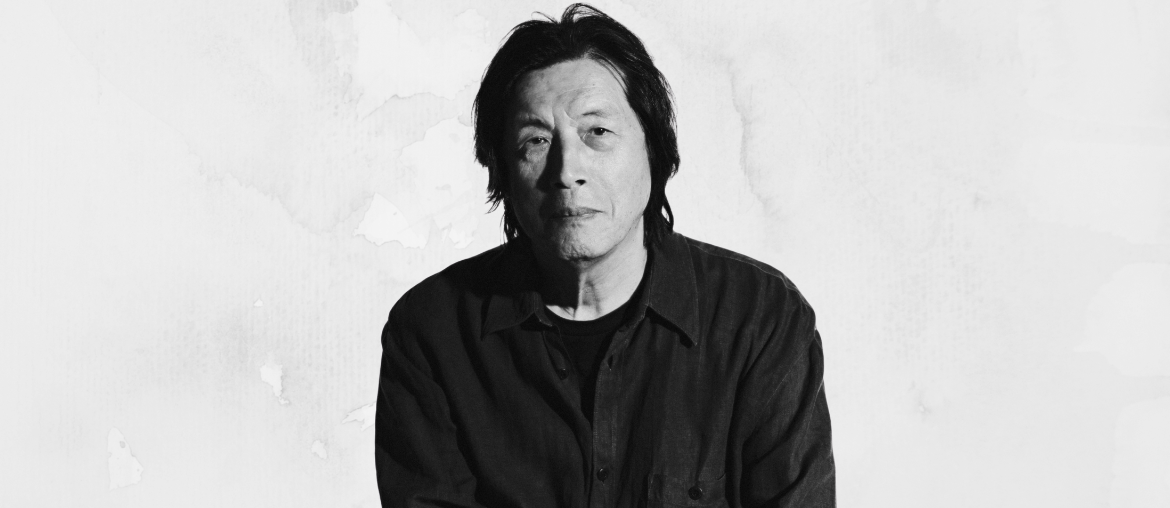
I make films for the kind of people that are characters in Oasis or Poetry.
— Lee Chang-dong
Along with Jia Zhangke, Apichatpong Weerasethakul, Tsai Ming-liang, and Todd Field (when he feels like it), Lee Chang-dong stands among a group of filmmakers countable on a single hand who look at our impossible present and attempt to earnestly reckon with it using film form — which is to say, he is one of the greatest filmmakers in the world. With each film, he reminds us that human-centered filmmaking isn’t a thing of the past: it is alive, vibrant, and more important than ever. A similar practice can certainly be found elsewhere in cinema’s past, like in the social realism of the Dardennes Brothers or in the films of the Italian Neorealist movement (Lee himself cites Luchiano Visconti as an inspiration), but while Lee is cut from that cloth, he floats away from those traditions on the howling winds of the 21st century. The films of Lee Chang-dong address the critical unspoken and unresolved question of our day: how do we move forward — how do we live at all — when the future has been frozen in amber by late-stage capitalism?
Lee began his career as a novelist, transitioning to filmmaking in his 40s (yes, there’s still time!) following the success of screenplays for To the Starry Island and A Single Spark, and his debut Green Fish serves as the thematic blueprint for his entire filmography: money, particularly as an interpersonal issue; the passage of time and malaise as a result; small hierarchies standing in as microcosms for systems of power writ large; the notion of returning; and disparagement of organized religion. Tyler Thier’s essay “Maggot in a Honey Bucket” identifies many of the film’s strengths, but as Lee’s films burst with humanity, so too does Thier’s essay remind us that we viewers are human. He brings the film out of the ’90s and into the present, reflecting on the role watching the film on an iPhone had on his experience. “An unnerving tension unfurls when viewing Green Fish in this manner,” he writes, “a struggle between immersion and seizure, a sense of curiosity that easily tips into control.” Green Fish reflects that very tension: it fits a critique of South Korean society into the constraints of the gangster movie, immersing itself in convention to seize the soul hidden beneath genre patina. In one of the film’s most moving scenes, protagonist Mak-dong helps his disabled brother pee at the side of a road. He joins in. His other brothers follow suit, and they pee together under twinkling piano. It’s not the kind of male bonding you see in something like Goodfellas.
Peppermint Candy is of a piece with Green Fish in that it is explicitly preoccupied with South Korea’s transformation in the latter half of the 20th century. As Brandon Streussnig puts it in “The Man Who Saw the Future,” “If Green Fish interrogated what it meant to lose your home to urban sprawl and upward mobility, Peppermint Candy zeroes in on the minds broken to achieve it.” His essay situates Peppermint Candy in relationship to the nation which birthed it, emphasizing how Lee uses its antihero Young-ho as a gateway through which to examine South Korean history as a lived experience. “It’s simple enough to show the young, idealistic Yong-ho in 1979 and let his fall from grace manipulate us into feeling sorry for him,” he continues. “To throw us in the deep end to live with an erratic, abusive beast, forces us to piece together how this could happen.” Peppermint Candy also gives us a good look at the artist-in-bloom: Lee’s eye for the elemental sharpens, his facility with motif improves, and his proclivity for naturalism burgeons. It’s a major step forward for Lee, but nobody could have predicted the quantum leap he would make between Peppermint Candy and his third — and, in this writer’s opinion, greatest — film.
Following Peppermint Candy, Lee’s interests grow more universal, and his style matures alongside these interests. South Korea remains the setting for all his work, but his aperture opens up to capture his characters’ relationships to a globalizing world: he slides references to international culture — like Mickey Mouse hanging from a windshield or Spider-Man printed on a backpack — into the background. His characters remain identifiably, perhaps even defiantly, South Korean, but they face problems caused by systems that can be found across democratic societies, and Lee adopted a new technique to re-center the human being in the context of those systems. And when Lee fully embraced naturalism, it was game over for the rest of us. Like many liberal humanist filmmakers, Lee utilizes a blend of grounded handheld frames, a refusal to cut, and heightened dramatic action to bring us into his characters’ worlds, but Oasis reveals an emotional sophistication unseen by most filmmakers working in this mode: in Lee’s willingness to poke at the raw, bubbling wound of mental and physical handicap in the contemporary world, it demonstrates bravery, and in its ability to bring to glorious life characters who are otherwise left to rot because their existence is too complicated and inconvenient for able-bodied and neurotypical people to contend with, it demonstrates a boundless compassion. Padaí Ó Maolchalann’s essay emphasizes this compassion. “Inspired by his experiences with his sister, who also had cerebral palsy,” they write, “Lee examines the lives of these two people, dismissed, infantilized, and used by the people around them and the world at large, with generosity, identifying their drives and desires, and depicting them as human beings both defined by their disabilities and defined by their humanity. He resists easy patronization, showing audiences a portrait of life with disability that, in 2002, was unusually frank and non-judgemental.” In addition to its compassion, Oasis is the film that burns Lee’s style into a permanent present tense: when we watch its central couple careen across a subway platform or dance in the middle of traffic during a jam, it’s done with an immediacy and an intimacy unique to Lee. It’s an immediacy likewise found in the other two films of his masterpiece period: Secret Sunshine and Poetry.
Secret Sunshine follows Shin-ae, a woman moving to the town of Miryang (“secret sunshine” in English) with her son. Shin-ae is Lee’s most haunted protagonist, and Secret Sunshine itself is haunted by Akira Kurosawa’s crime thriller High and Low, which Lee turns on its head and repurposes as a scathing condemnation of Christianity in South Korea. (In 1900, 1% of South Korea’s population was Christian. In 2007, when Secret Sunshine was released, the number was close to 30%.) There’s a direct correlation between the rise of capitalism and the rise in Christianity, but Lee is too savvy to rest on bloviating. Chris Cassingham identifies this nuance in his essay on the film: “Never one to spell out or explain, in Secret Sunshine Lee instead encourages the viewer to make judgments based on a heady dose of measured suspicion and fervent faith.” He also accurately locates Lee’s place in the tradition of melodrama: “As in Mildred Pierce (1945), the mother of all melodramas, in this film the collision of the professional, personal, and parental irreparably alters its protagonist’s life.” Shin-ae gets put through the wringer in Secret Sunshine, but as in the great melodramas of movie history, she comes back from being marginalized in her own story and reclaims some autonomy as a result of her suffering. To borrow a phrase from a different religion: no mud, no lotus.
All of Lee’s protagonists are, to one degree or another, marginalized, but Mi-ja, Poetry’s protagonist, is so marginalized that she vanishes from her own movie. Mi-ja suffers from dementia, yet while she struggles with memory loss, she also holds a psychic burden that isn’t her own: her grandson Wook repeatedly gang raped Agnes, a classmate of his, for six months. In his essay on the film, Milo Garner excavates the role language plays in communicating the maelstrom of our inner lives — its poverty, but also its necessity. He highlights the difference between nouns and verbs: “Verbs, by their nature, are ambiguous in their particulars,” he writes. “They represent action in isolation — neither affecting nor affected by any particular subject or object.” Poetry thrives on that ambiguity, and Garner invites individual interpretation with a wise and singular reading of one of the film’s pivotal scenes. Inspired by Garner, this writer will share an interpretation of his own:
Mi-ja disappears from Poetry, but there’s an unspoken layer to her disappearance that gives it a powerful resonance — before Mi-ja’s mental faculties have failed her entirely, she does the right thing. Toward the end of the film, Mi-ja experiences a flash of lucidity. She picks Wook up from an arcade and treats him to pizza — her way of giving him a final meal. (“Is it good?” she asks.) She insists that he clip his nails and shower before his mother arrives to visit them. Later that evening, playing badminton out in front of their apartment building, Park Sang-tae, a detective Mi-ja met at some poetry readings, arrives to take him away. We don’t see Mi-ja make the phone call, but the sequence of events strongly suggests an active decision. There are too many conveniences otherwise: Mi-ja criticizes Wook for not taking care of his hygiene, an opinion she heretofore has kept to herself; Mi-ja plays badminton with Wook at night, breaking a precedent; Park Sang-tae, of all people, is the one to come to Mi-ja’s apartment. Lee provides the pieces, and he lets us put them together while he holds on Mi-ja and Sang-tae playing badminton. Lee’s faith in the viewer to actively bring ourselves to the work anticipates his beguiling follow-up, Burning.
Burning is the movie that — despite the ambiguous contours of its exterior — lays bare Lee’s thesis: modernism has failed us. Eight years passed between Poetry and Burning, and in that time the world turned completely upside down; it called for a new kind of filmmaking. Otherwise preoccupied with reality, Lee’s Burning turn is described by Dhruv Goyal as “a major miracle… pitched so perfectly between the real and the surreal that it manages to blur the boundary between them almost imperceptibly.” It stylistically toys with the transition between modernism and postmodernism, since protagonist Jong-su, an aspiring novelist, has no idea his approach to the world — his points of reference as a writer are modernists like F. Scott Fitzgerald and William Faulker — is completely useless. Burning is enigmatic only insofar as it employs a cool mood to belie an underlying international violence threatening to boil over at every turn: Jong-su lives on the border between South Korea and the DPRK, and when the TV is on at home, newscasters are reporting on the unemployment rate and the rise of Donald Trump in America. Jong-su has no outlet for the inarticulable anger he feels because of his uselessness, so he resorts to violence. “Shot in an extensive long-take,” Goyal writes of the film’s climax, “Jong-su’s cold-blooded murder of Ben reveals nothing more than his explosive rage — a damning reflection of him becoming the spitting image of the father he hates.” And then, following that outburst of rage, eight more years of silence from Lee.
Several of the essays in this retrospective refer to Lee’s latest film, Possible Love, and rightfully so: it hovers over his entire filmography like a Sword of Damocles, inviting deep scrutiny and a healthy degree of skepticism about his work’s efficacy as an agent of change. It is most directly in conversation with Burning, but it evokes Oasis and Secret Sunshine and Poetry in its bottomless curiosity about the lives of its characters, and it even brings home Lee’s use of karaoke — an entertainment depicted in every one of his films — as a means for these characters to express feelings they otherwise find inarticulable. Lee is now 72, and he struggled to finance Possible Love; it was only when Netflix swooped in to distribute that the movie got made. He doesn’t discuss his feelings about accepting streaming money point blank in interviews (nor should he), but as this writer noted in his review of the film, he doesn’t need to: he makes his ambivalence clear in the film. It’s a parting shot from a filmmaker arguing that the work he’s done is insufficient, that he’s made too many compromises, and that the film image is not enough to satisfactorily communicate the enormity of the human experience. There’s no better way to say “So long and thanks for all the fish” than in Possible Love’s transcendent final moments, when the glory of a full moon is shared between husband and wife and almost — but, critically, not — sent via text to the director of the film about their lives.
Yet Lee’s own argument doesn’t hold up against the preponderance of counterevidence which exists in his very work: it is too rich to deny. Lee’s films are for everyone — the diversity of perspectives and creativity found in the essays written for this retrospective should be proof enough of that — and they perform cinema’s ultimate magic trick: they are a reappearing act. They drag flesh-and-blood people out from the darkness of postmodern decay, restoring dignity to those who live under the pressure of untenable economic or social circumstances. Taken together, they encourage us to see the limitations of these circumstances more clearly and to engage more deeply with the most vulnerable parts of ourselves. It is in this confluence that we see the essence of Lee, and we begin to understand that there is life beyond this impossible present.
Individual essays on each of Lee Chang-dong’s feature films will be published on the In Review Online substack across the next two weeks, leading up to Possible Love‘s Netflix streaming release on November 6. Pieces will be linked below and available to subscribers. If you haven’t yet subscribed, please consider doing so and supporting our great writers!
Comments are closed.