
In This Dispatch
KINKI
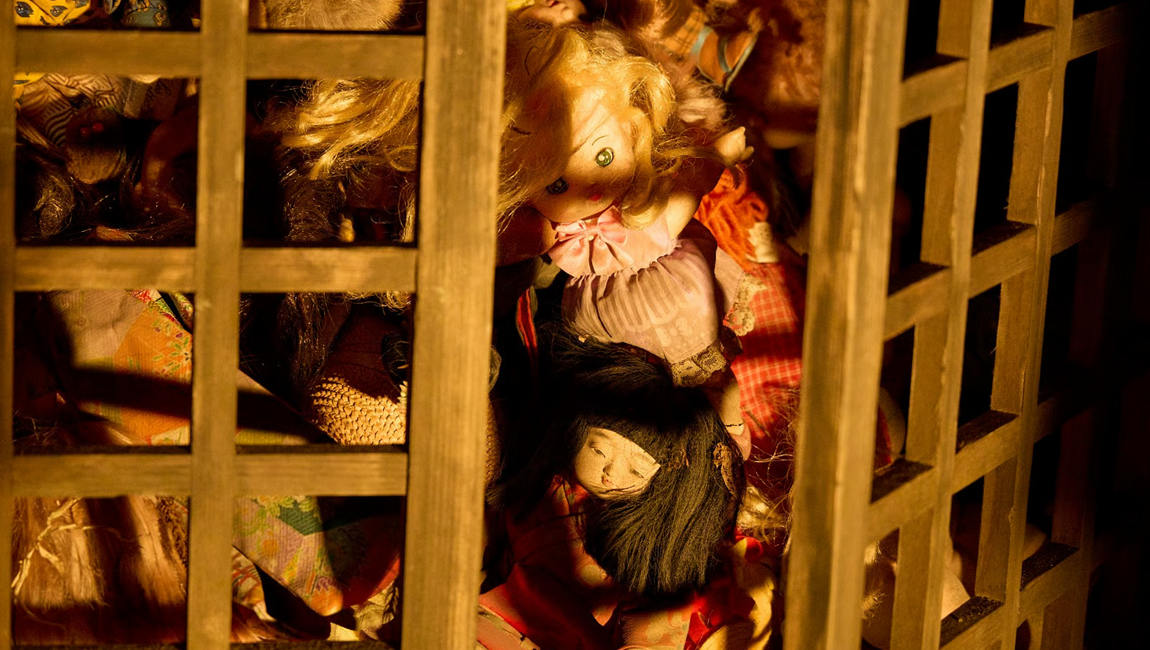
Beyond that upper tier of ubiquitous classics like Ring, Ju-On, Audition, and Pulse, Kōji Shiraishi’s Noroi: The Curse has cemented itself as a “you’ve gotta see this” next step for J-horror fans looking for something that can stand alongside the heavy-hitters everyone’s seen. Noroi, a faux-documentary investigation into a string of paranormal incidents, makes better use of the found footage form than just about anything, taking an omnivorous approach to the subgenre and incorporating all kinds of created archival video to enhance its eerie sense of reality. Shiraishi has made many other films, some in the genre and others outside (like his great pink eiga revival film Safe Word), but his big hit is of particular interest as it’s been cited as a major inspiration for the novel About a Place in the Kinki Region, now adapted as Shiraishi’s latest feature.
Indeed, KINKI shares a lot with its predecessor, down to a similar set of explored locations, like haunted apartment complexes and mountainside forests. The concept is taken one giant step further this time as the film’s uppermost layer of reality is presented traditionally (i.e., not found footage), though the film also disorientingly introduces this through embedded video on a Twitter feed. Principal characters Ozawa and Chihiro, employees of a paranormal magazine, dig through the materials left behind by their vanished editor in search of both an answer to his disappearance and guidance toward finishing the big story on which he had been working. As they comb through seemingly unconnected media — home video, TV documentaries, Twitch streams, interviews, and even some crude anime — we see what they do.
The types of horror explored in these segments are as diverse as the formats, ranging from unnervingly tinged videos of schoolchildren at play to folk-horror retellings of local mythology to Blair Witch-style freakouts. Throughout, Shiraishi hits upon indelible, haunting images, like in the segment wherein a live streamer explores a supposedly haunted house where hundreds of multicolored nooses hang from the ceiling, and identical children’s drawings plaster the walls. As the streamer pushes through the mess of rope, he finds a loop made of barbed wire.
Each video suggests its own world, a scenario that could sustain its own feature, but soon connections emerge and send Ozawa and Chihiro into an on-the-ground investigation into the strange happenings in the Kinki region (more commonly referred to as Kansai). At the same time, one of the videos in the collection, a cursed tape called “Watch This and Die,” has manifested a haunting around Ozawa, so their investigation takes on dramatically personal stakes.
Naturally, by the time KINKI reaches its bizarre, cosmic horror-inflected finale, we’re left with more questions than answers. Even when Shiraishi’s evils take corporeal form, they remain impossibly strange, too formally complicated to describe with accuracy. But once the film finally zooms out to its cell phone video frame, the director’s game is, if not totally clear, at least understood. The cursed videotape at the heart of Hideo Nakata’s Ring (and Koji Suzuki’s source novel) is a safe artifact to anyone who simply does not watch it. What KINKI does is riff on that film for the contemporary era, where we constantly see images and video without our total consent in an endless feed of information. The characters in Ring chose to watch the tape; Ozawa is subjected to “Watch This and Die” unwittingly. For Shiraihi, horror is no longer an opt-in proposition. — CHRIS MELLO
Cold War 1994
Released in 2012, Leung Lok-man & Sunny Luk Kim-Ching’s Cold War became a gargantuan commercial smash and critical success, breaking domestic box office records and scoring multiple awards at the Hong Kong Film Awards. A sequel followed in 2016, again crushing records (it was the highest grossing domestic film of all time for several years). The two films work as a diptych of sorts, the hijacking of a police van and the ransoming of kidnapped officers in part one seamlessly blending into part two, as throngs of characters deal with the fallout of all the political maneuverings and various corruptions coming home to roost. How then to continue this lucrative franchise almost a decade after its last entry, its aged Hong Kong superstars now even older and less mobile? The answer, apparently, is that it’s time to rewind and make a prequel, introducing younger versions of multiple characters and tracing the beginnings of their moral compromises and slow descents into dirty dealings.
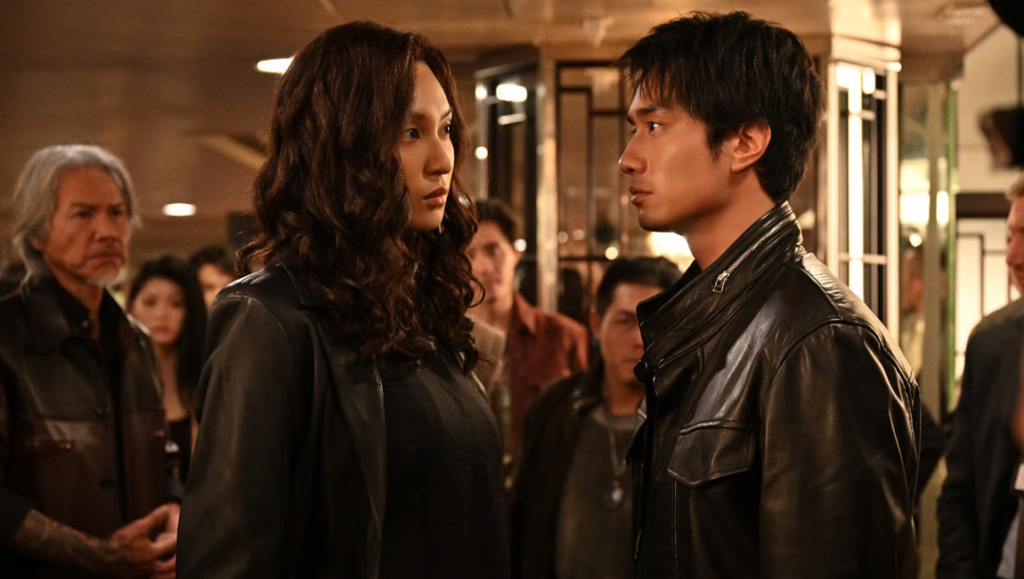
It’s hard to guess how viewers who have never seen the first two films might feel about this blockbuster-sized prequel (the first of two, with Cold War 1995 coming soon!), but Leung, now working solo, has made sure that Cold War 1994 is as overstuffed with intrigue and triple crosses as its predecessors. It would take a sizeable flow chart to identify each and every speaking part in this franchise, along with their various connections and allegiances, and Cold War 1994 dives right in to its own tangled chronology. Meeting in 2017, sometime after the events of Cold War 2, Police Commissioner Sean Lau (Aaron Kwok) is meeting with famed lawyer Oswald Kan (Chow Yun-fat) in search of information on M.B. Lee (Tony Leung Ka-fai), who Lau is attempting to vet for a senior security council job. Kan produces a top-secret file detailing a kidnapping case in 1994, in which M.B. Lee and then head of the Organized Crime and Triad Bureau Peter Choi worked together. Of course, Lee and Choi are adversaries in the franchise’s first two films, but here, as much younger men, they are ostensibly allies, attempting to unravel a case that will wind up involving gangsters, corrupt cops, a powerful local family, and all manner of internal police department struggles.
Critic Sean Gilman has described Cold War as “two halves of a police force at war with each other’s methods and tactics,” essentially the take-no-prisoners, action-prone cops valorized in the movies versus the bureaucratic side more interested in following rules and regulations. That tension carries over into 1994; while the film is technically an extended flashback, it will occasionally cut away to Aaron Kwok and Chow Yun-fat talking in an office in 2017 (presumably an excuse to showcase a couple of icons, with the actors obviously filming their scenes in an afternoon), forcing viewers to put together just exactly how these past events are influencing what we’ve seen in the other movies. It’s convoluted, to put it mildly (most criticisms of Cold War 1 and 2 center around the incessant talk; one’s enjoyment of those films most certainly rests on how much you can tolerate men in offices yelling at each other). 1994 is more action-forward than these earlier entries, at the very least, bringing it more in line with what we might consider the 21st century aesthetic of post-handover Hong Kong cinema.
To really get into the film, one must first consider a wealth of narrative information. Young M.B. Lee, now played by Terrance Lau, is head of the OCTB, and when one of his officers is caught gambling away drugs stolen from police evidence, he gins up a plan to knock over a drug exchange to replace the missing evidence. The job goes awry, an officer is killed, and M.B. stumbles across a kidnapping plot. Young Peter Choi (Daniel Wu) is determined to run interference for M.B., and helps protect him from internal investigation. Meanwhile, the kidnapped man, K.F., is the brother-in-law of Sir William Poon, head of the most powerful family in Hong Kong. The kidnapper, Tiger, is on the run, and the current police commissioner decides to blame the failed operation on M.B. In a panic, Choi tells M.B. to hide out so officers from the Special Branch can’t arrest him, but M.B. instead goes to mob boss Jodie (Louise Wong) to ask her to give up Tiger. She refuses, but assassins attack them and M.B. saves Jodie’s life. M.B. convinces her that powerful forces have hired Tiger and that she must give him up, and she obliges. M.B tells Choi about what he has uncovered, and they plan an assault on a boat where Tiger is keeping K.F. Choi leads the charge on the boat, but tells M.B. that when they arrived on the scene Tiger was already dead, the ransom money and K.F. long gone. And from here, there are a few more twists and turns along the way as players form alliances and then dissolve them, double-crossing each other in various ways.
As in the first two films, many of the power plays here are of the verbal sort, and keeping track of who’s on who’s side and which of the various police squads are feuding with each other borders on the absurd. But Leung does at least peppers the film with plenty of action beats; the initial shootout between M.B.’s crew and Tiger’s kidnappers is a dud, shot too close and cut to ribbons in the edit, but other sequences fare much better. The assassination attempt on Jodie is a fantastic bit of classic HK action, as multiple assailants converge on a restaurant and a bevy of players exchange gunfire in close quarters. There are also a couple of well-staged car chases, and a climactic bit of business that finds two cars crashing into each other while men fight on top of them, all while an airliner preparing to land looms in the background. It all comes to a head with big reveals that rupture the relationship between our intrepid cops, as well as filial dealings within the Poon family and some dastardly subterfuge from the British (who are preparing to hand Hong Kong back to China but do not plan on losing their financial interests there).
It’s hard to shake critic Filipe Furtado’s assessment of the original Cold War, which he described as “slick, engrossing, if somewhat bland.” There’s nothing here you haven’t seen before, from the super hi-def shots of the glistening skyline looming over a skittering populace to the glass-encased offices where life and death decisions are being made. It’s an undeniably well-oiled machine — both this film and the franchise at large — and fans of the the first two entries will surely be satisfied (not to mention enticed by the preview for 1995, which ends this installment). Ultimately, there’s simply none of the personality here that you would find in the Infernal Affairs trilogy or To’s Election films. But no doubt an a massive audience will buy the ticket and take the ride. Sometimes commerce trumps art. — DANIEL GORMAN
The Brightest Sun
It’s the summer of 1994, and a P.I. by the name of Yonemoto (Jiro Sato) has been found brutally beaten and stabbed to death in his own home. The crime scene is a ghastly one, but unfortunately for the deceased, he was apparently so reviled in life that everyone seems to be silently rejoicing his demise; his funeral venue is half-empty, with one attendee noting that even his wife appears relieved he’s gone. Still, a dead cop is a dead cop, and so fellow Detective Mitsuo Satake (Hidetoshi Nishijima) is tasked by his superior (the great Kōji Yakusho) to find out who terminated his despicable colleague and why. Accompanying him is detective-in-training Satoko Nakano (Hikaru Mitsushima), a wet-behind-the-ears but eager-to-please novice. Their investigation of Yonemoto’s final days on earth leads them to an unsolved, nine-year old kidnapping case involving an infant born with spina bifida. As Satake and Satoko delve deeper into this mystery, they’re forced to confront their own grief and past failures as parents, unexpectedly becoming deeply and personally affected by this byzantine nightmare.
Some films can catch you completely by surprise. When The Brightest Sun commences, it bears all the hallmarks of an impossibly grim murder mystery, something akin to Memories of Murder or Se7en. The director is Tetsuya Nakashima, who made a name for himself with the vibrant sugar rush of Kamikaze Girls but also the darker and considerably more violent Confessions and The World of Kanako. For his latest film, Nakashima deliberately keeps the audience off-kilter with his achronological and elliptical editing, doling out information in fits and spurts. It’s the perfect feature to emulate the messy headspace of central character Satake, who is introduced as little more than a leather jacket perpetually swirling around the inside of a liquor bottle. He’s a man with a haunted past, begrudgingly reporting for duty before he can go home and tie off several to silence his inner demons. Satake’s withdrawn demeanor clashes with the more chipper Satoko, the partner looking to make a good impression but who only finds frustration in having to do most of the legwork in their investigation.
While the first act sets the stage for a standard-issue detective procedural, the revelation of the kidnapped child shifts the film’s priorities on a dime, softening the picture and its two detectives. There’s Tomie (Haru Kuroki), the mother of the lost child, who has never given up hope in finding him. And then there’s the discovery of Shin, a nine-year old child with a spine bent at a ninety-degree angle, who lives in a seaside shack with father Akira (Kankuro Fuji). Convinced this is actually the kidnapped child, the detectives wiretap the house, unaware that this case hits closer to home than they ever could have anticipated. For Satake, he’s forced to reckon with his own loss of a child with disabilities, fracturing his relationship with his wife and keeping his teenage daughter at a distance. Satoko was once happily married with a daughter, but a hasty moment of self-defense in an effort to protect her from her husband’s drunken bender results in her losing custody of her daughter, only able to see her during arranged visits. It’s Satoko who grows closest to the mystery of Shin, then, listening in on the wire as she grows heartened with the treatment of this child, remaining unconvinced that Akira would never do such a thing if he were actually the kidnapper.
The Brightest Sun takes pains to drive home just how difficult raising a child can be, detailing all of the exhaustion and frustration that compound when taking care of a child with special needs. Nakashima does not shy away from this difficulty, but he’s not out to lambast these families either; he’s merely presenting a detective story to share the reality of what less privileged families must contend with in order to survive. The Brightest Sun unfolds gradually but masterfully, melting its icy center to approach something more deserving of its optimistic title. There are still a few missteps along the way: the film opens with a definition of the word “repentance,” just in case any of its core themes should fly over the viewer’s head, and some will surely wholesale reject its change in tone from grim to treacly. But Nakashima works hard to keep the film’s myriad disparities cogent, delivering a largely assured work of genuine sensitivity. — JAKE TROPILA
Montreal, My Beautiful
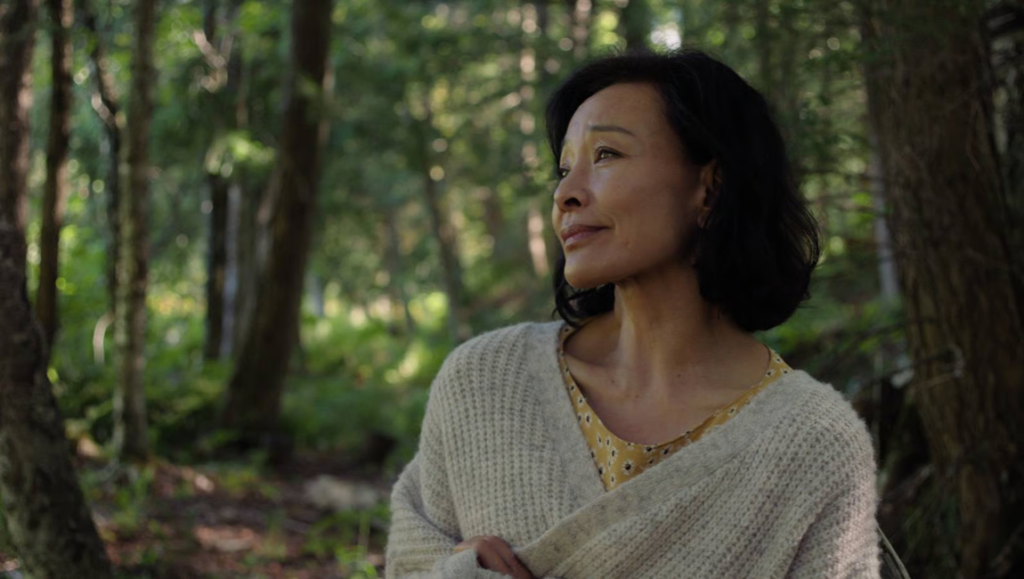
Chinese-Canadian writer-director Xiaodan He’s film Montreal, My Beautiful is a thoughtful, understated independent film with an ace up its sleeve: the film’s protagonist is played by Joan Chen, whose incandescent screen presence and expertly controlled dramatic range are deployed to great effect by He. He falls into a few common traps — the film’s structure and pacing are spotty, and the narrative focus strays at times — but Chen’s excellent performance, bolstered by He’s emotionally astute rendering of her character, carries the film.
Chen plays Feng Xia, the matriarch of a tight-knit Montreal family. Feng Xia and her husband Wang Jun (John Xu) emigrated from China to Canada years before to raise a family. Despite their love for their children, there is an inevitable cultural disconnect within the family: the parents speak mostly in Chinese, while their 18-year-old daughter Joy (Pei Yao Xu) and school-aged son Dong Dong (Anzhe “Angelo” Zhang) are native French speakers with little knowledge of their parents’ language or culture. At the film’s outset, Feng takes small steps to interact more with local culture and to explore long-buried aspects of herself: she begins taking French classes, and she surreptitiously downloads a queer dating app to meet women. What begins as a tentative exploration of her sexuality leads to a deeper reckoning with herself when she meets Camille (Charlotte Aubin), an openly lesbian woman over 20 years her junior. After an initial spark of chemistry, they meet with increasing frequency, and with correspondingly increasing intimacy. While their slowly unfurling love expands Feng’s sense of herself, it also poses a significant threat to her family life.
He uses the character of Feng as a locus for tensions surrounding cultural, national, and sexual identity. Feng’s relationships with her family members, Camille, and both her native country and her current home are in a state of flux; her well-crafted character arc provides plenty of opportunities for exploration of how immigration can create a multifaceted, shifting self-identity that may create insoluble conflicts in all spheres of one’s life. The social commentary is effectively handled, but the audience’s emotional buy-in relies on believing Feng as a dimensional human being. He is careful to write Feng with both sympathy and complexity, yet it is Chen who truly vivifies the character. Faced with the challenging task of playing a character who views herself as “simple” and meek, but who contains much more depth than she allows herself to access, Chen plays much of Feng’s development on the level of subtext, allowing micro-expressions and subtle reactions to chart her character arc. He smartly shoots Chen in close-up for much of the film, allowing the audience an intimate view of the emotions shifting across Chen’s face like tectonic plates. The scenes in which Feng experiences true emotional overwhelm, played by Chen with moving uninhibitedness, are all the more affecting for their contrast with Feng’s typically restrained demeanor.
For all its strengths, Montreal, My Beautiful can veer toward aimlessness at times. The film has a number of false starts, and it ends too abruptly. Along the way, scenes that read as extraneous pop up regularly and slow the pacing of this already patient film. He’s film also suffers when she allows her focus to drift away from Feng; subplots involving Camille and Wang Jun, while ultimately proving narratively important, are given too much screentime for a film that works best when it is tightly focused on its protagonist. Still, the heart of the film lies with Feng Xia, and Chen’s performance is likely to leave a lasting emotional impression on audiences. — ROBERT STINNER
Human Resource
The grist mill of capitalism has no shortage of critics today, incisive policymakers and inane pedants alike who know too well the anonymous and alienated husks that socioeconomic precarity turns us all into, but who, aside from recourse to the tried-and-tested dispatches of cynicism, have little new to say. Perhaps this is by design in a system that pits individuals against unerring market forces and, by extension, favors manic sentiment over measured reason; perhaps Mark Fisher was right when he wrote in Capitalist Realism of the “massive desacralization of culture,” in which neoliberal imagination falters under the guise of first-world consumer freedom. Regardless, this freedom comes undone most acutely in the corporate backrooms of HR, where the bullshitters themselves steer clear of their own product as they survey index after index of aspiring workers. The freedom to choose your job and enter into capitalist relations, being caveated by an alternative of certain starvation, is never quite freedom in the truest sense.
Human resources is thus a department uncannily attuned to the travails of modern working life, and consequently its focus in Nawapol Thamrongrattanarit’s ninth feature warrants closer look. Within the nested environs of corporate Bangkok, recruiter Fren (Prapamonton Eiamchan) contemplates the reality of her middle-class dream as she anticipates the birth of her child. Drifting through training seminars replete with corporate-speak and filled with a simmering urgency to find the replacement for a colleague who up and went, she winds up as a silent protagonist, her face pensive and ready, at a moment’s notice, to implode. Much of Human Resource, in fact, abounds with an implosive impulse: from a bully superior (Varinton Yaroojjanont) whose remit extends even to HR, to an uneasy first trimester spent with her well-meaning but distant husband Thame (Paopetch Charoensook), Fren’s despondent outlook gradually approximates that of her fellow recruiter Tenn (Chanakan Rattana-Udom), whose all-too-jovial mask lets slip on occasion in their professional interviews.
One such interview leads to Jida (Pimmada Chaisaksoen), a quiet young woman with an indomitable spirit battered into her, getting the job. Almost right after, a minor car accident forces Fren to reveal her pregnancy to Thame and thereby forecloses any furtive possibility of abortion. The couple ease into the logistics of starting a nuclear family (polite dinner celebrations with Thame’s business clients, waitlists — years in advance! — for elite private schools, visits to mom, etc.), every frame of Thamrongrattanarit’s aseptic film a well of repressed gloom. While its depressive atmosphere no doubt remains integral to Human Resource, one can’t help but feel boxed in stylistically by a work eager to play it safe and complete the checklist of themes and tones. A road rage episode illustrates a certain helplessness of the working middle; a film filled to the brim with familiar pastiches bristles with certain boredom. As it skitters into a series of inoffensive longueurs, nonetheless, its title bears unpacking. Human resource as singular could imply a finitude of resources, a precarious little thing, or it could exalt the unavailing resourcefulness intrinsic to humanity. “We didn’t force her into it,” Fren comforts Tenn as they prepare to hire Jida. That’s a resourcefulness of language alright, but exploited in one too many consolation. — MORRIS YANG
Comments are closed.