
In This Dispatch
Turgaud
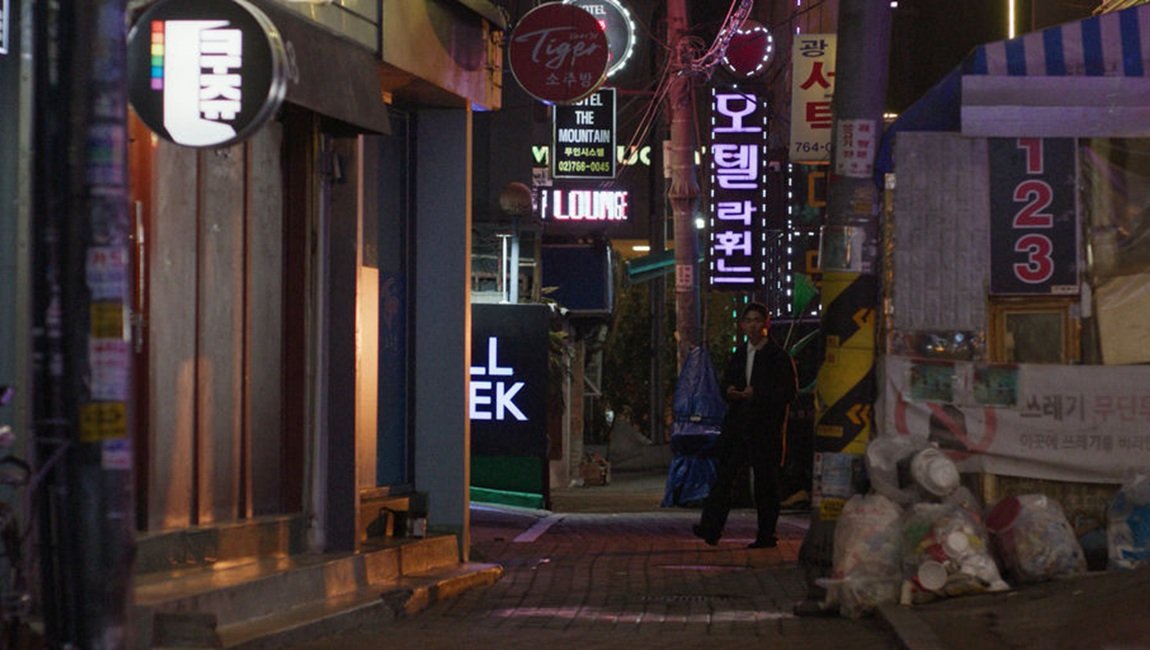
At the small airport in Karatas, Bek (Berik Aitzhanov) arrives dressed for another climate. Greasy hair hangs around his untrimmed beard, and a heavy fur coat covers him despite the semi-arid heat. A shotgun rests at his side. The men sent to receive him search his luggage with the officious gravity of immigration agents and find a copy of Hamlet. The joke is already complete: a criminal outfit has built itself an airport protocol. Bek then notices the silhouette of the woman who arrived with him, raises the gun, and pauses. He recognizes the threat before the story identifies her. His instincts work; deciding what to do with them takes longer.
Bek has been hired to protect Baylat (Dias Baituov), a criminal landlord currently seeking public office. Anna Starchenko’s taciturn gunwoman has come to kill him, accompanied everywhere by a silent child. None of this surprises Bek very much. He regards Baylat and his security crew with the irritation of a capable employee discovering that incompetence outranks him. Karatas, director Adilkhan Yerzhanov’s invented province, has always accommodated this sort of arrangement. Goliath tied housing and employment to the gangster terrorizing a community, while Steppenwolf treated violence as the local atmosphere. Turgaud follows the payroll. Baylat calls his coercion security, offers Bek a job administering it, and expects professionalism to settle any moral questions.
Yerzhanov often leaves the camera at a remove and asks Aitzhanov’s face to carry information that dialogue withholds. The actor’s stillness has considerable weight: disgust appears, recedes, and is replaced by the tired calculation of a man accustomed to serving people he despises. For a while, Bek’s delays give ordinary professional gestures an uneasy second meaning. Across 124 minutes, however, the device grows burdensome. Some scenes acquire a peculiar tension from waiting for him to act. Others seem to be waiting for the screenplay to catch up. A protagonist uncertain about action need not make for an inert film, but Turgaud too often treats duration as if it were the same thing as thought.
The comedy is sharpest when Bek’s competence spoils the rhythm of the action movie around him. He insists that Baylat needs armored transport, irritating the existing head of security and prompting a challenge. The resulting fight barely qualifies as one. Men swing; Bek slips aside; his attackers tumble with the delayed timing of slapstick. Then he picks up a dombra, the Kazakh two-stringed lute, and plucks a single sour note as the scuffle gathers speed. He supplies his own defective action score. The joke is beautifully stupid, stripping the confrontation of its masculine ceremony while still allowing Bek to dominate it. Yerzhanov displaces the expected impact into dodges, pauses, and that stubborn note. This is genre as an old routine whose participants can no longer summon much conviction.
Competence still ties Bek to Baylat more securely than loyalty would. After discovering that the former security chief plotted to kill their employer, Bek promises that the man’s family will be spared if he surrenders. The man accepts. Baylat ignores the agreement and orders his own son to beat the family, their heads covered by bread sacks. The boy attacks with delighted abandon. Bek’s word, which he imagined as a private reserve of honor, turns out to belong to his employer too. The sequence leaves little room for heroic misunderstanding. Protection means keeping Baylat alive long enough for him to violate other people’s promises, and the violence is already being passed down as a form of amusement.
Turgaud frequently accompanies brutality with sardonic voiceover or music that treats the bloodshed as a joke. The resemblance to Tarantino lies in the use of tonal incongruity to loosen the bond between impact and consequence, though Yerzhanov offers little of Tarantino’s seductive chatter or choreographic pleasure. His thugs are usually too shabby to become glamorous. At its best, the humor catches aggression exceeding the intelligence of those responsible for it. The casting session, where a man apparently earns his place in the crew because he can dance flamenco, works through sheer administrative nonsense. Elsewhere, the winking accompaniment becomes predictable. As bodies accumulate, the viewer’s detachment begins to resemble the indifference the film attributes to Karatas. Cynicism becomes one more cue on the soundtrack.
Bek supplies the usual fatalist defense. If the gunwoman kills Baylat, he argues, another man will occupy the vacancy, perhaps someone worse. She allows for the possibility that the next man might be better. The exchange is simple, almost schematic, but it puts pressure on Bek’s pose of weary knowledge. His pessimism has the convenience of a work rule: if power never changes, he never has to choose whom his skill serves. The child’s persistent presence makes that argument harder to shrug off, though Yerzhanov gives the figure no dialogue and little independent identity. The film seems to want the child in the moral geometry of each confrontation without deciding whether that presence amounts to witness, vulnerability, or hope. That uncertainty is preferable to forcing a national allegory onto the character, but it also leaves Starchenko’s gunwoman carrying an underwritten symbolic burden.
Later, Bek sits beneath colored light cast through an image of saints and asks forgiveness. The scene removes ignorance as a possible alibi. He knows where he is and what his labor enables; what he lacks is a tolerable way to stop. His last-minute decision to change sides, followed by his willingness to surrender himself to death, carries the outline of redemption, though relief may be the stronger feeling. By abandoning his assignment, he finally makes a choice that cannot be translated into professional duty. It is also a compact resolution to a conflict that the film’s long stretches of contemplation have circled more often than deepened.
There is pleasure in Turgaud’s scuffed grandeur, especially when Baylat’s miniature regime appears monstrous and embarrassingly amateur. Yerzhanov remains alert to the comedy of men using genre poses to disguise the pettiness of their authority. Yet an action film that continually postpones action must make the waiting exert pressure of its own. Here it sometimes produces only vacancy, with another unreadable glance asked to hold the narrative together. Bek’s eventual refusal preserves a battered sense of justice in Karatas, but Turgaud only reaches it after too much waiting for his face to decide what the rest of the movie has already shown. — GUILHERME QUIREZA
We’re Nothing At All
Though Western cinephiles are likely most familiar with Herman Yau through the grisly Category III shockers he made with Anthony Wong (Taxi Hunter, The Untold Story, Ebola Syndrome), the director has always been a filmmaker who plays in the bigger pool. Even in the ‘90s, his filmography included plenty of comparatively anodyne mainstream entertainments alongside his angrier cinematic howls. The ratio was never quite “one for me, one for them,” but over time, and especially in the decades since Hong Kong’s handover to the mainland government, the scales have tipped even more in favor of “them.” But among the Ip Man biopics and Andy Lau action blockbusters, Yau still occasionally manages to make smaller, angrier, more personal films, even if, as is the case with We’re Nothing at All, he has to finance and distribute the movie himself.
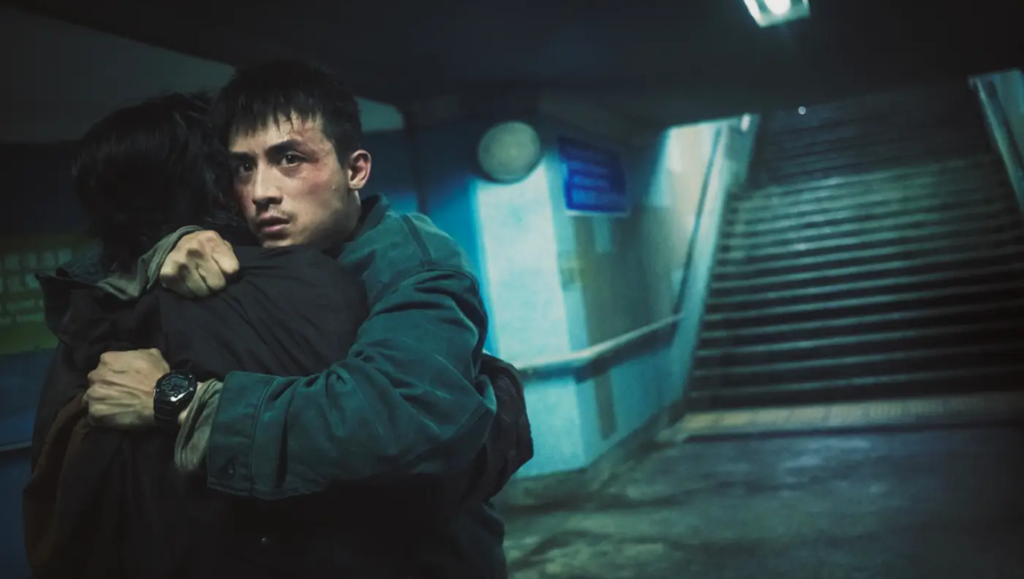
The inciting incident of We’re Nothing at All comes across as knowingly subversive for a filmmaker whose output has been increasingly concerned with computer-generated explosions. On Valentine’s Day, a double-decker public transit bus explodes and retired forensic investigator Lung (Patrick Tam) is asked to assist the police with picking through the rubble to solve the case. The charred remains of the bus are surrounded by the far-flung corpses of the deceased, and Yau lingers on melting, eviscerated flesh — not to gawk, but to reflect on the human toll of an event, giving the lie to the action violence of his lightweight mainstream efforts. From the scattering of body parts and the size of the hole, Lung is able to determine where the bomb went off and which of the deceased was responsible. Later, after bodies are identified, two remain unclaimed. Then, in flashback, these two — already identified as the perpetrators behind this attack — take center stage, and the film takes the shape of a slow-motion tragedy.
Ike (Ansonbean), a busking sketch artist, meets Fai (Anson Kong), a construction worker, when he draws him on a basketball court. The two begin a romance, with Ike moving into Fai’s rented room when his family kicks him out of their home after he comes out as gay. As the film goes along, Ike and Fai disclose histories of surviving abuse, all while facing violent homophobia and the indignities of poverty. Each man attempts suicide at one point. Meanwhile, in the present, Lung continues his investigation, unearthing his own personal connections to the case. We’re Nothing at All can be relentless in its accumulation of misery, and the effect is often suffocating.
It would be wrong, however, to identify Yau’s film as misery porn, as the filmmaker resists the urge to aestheticize or ennoble the suffering on display. There are no pretensions toward art. This is a social issues melodrama in bleak but honest form, centering two characters we are asked to empathize with even as we know their final act to be heinous. Yau can neither justify nor explain their final act, inspired by a real bus bombing in 1998, but he seeks to understand the larger social tragedy that can lead to flashpoints like this. Why does homophobia remain so rampant in a supposedly progressive society? Why, in an apparently economically ascendant Hong Kong, does the underclass endure unreasonable working conditions for little pay? Whatever is endured by those whom society casts off is the responsibility of the greater population, and tensions inevitably explode.
Yau’s approach also has its drawbacks as well. Those looking for nuanced queer representation are probably better off searching elsewhere as, despite the pop star leads’ strong performances, there’s not much to these characters beyond what is inflicted upon them. And the funereal monotone can sometimes feel like a cudgel. We’re Nothing at All is raw and messy, an imperfect movie that offers no easy solution to its anger. But that Herman Yau can improbably still find time and money to make hard-to-like movies like this is something worth celebrating. — CHRIS MELLO
HIGUMA!! The Killer Bear
There’s an old axiom about how you can’t manufacture a cult favorite, and instead the audience has to find it and organically turn it into one. But that hasn’t stopped some from trying. So here we have writer/director Eisuke Naito’s HIGUMA!! The Killer Bear, a creature-feature horror-comedy that’s more odd than funny and more perplexing than scary. It’s barely an idea for a sketch, and stretching this thin material to feature length proves disastrous.
We first meet teenaged Sora (Fuku Suzuki) showing his mother the newest video game that he’s designed. She’s delighted and supportive, but within minutes his father, the victim of a scam that has cost the family all its savings, has committed suicide. Sora’s future is in jeopardy, and when he hears his mother on the phone trying to finagle money to pay for his college, he instead enters the shady world of app-based gig work. Soon, Sora is assigned a number and begins doing low-level gangster work, making stops and ferrying envelopes to and fro. Eventually, he and some other anonymous guys are tasked with retrieving a gem, which was stolen by another gig worker named Sakurako (Wan Marui) who planned to keep it for herself. She fends off their attacks at first, but is eventually subdued — but not before she swallows the gem. The boys drive her deep into the woods, planning on making her throw up the gem, then killing her and burying the body.
This is an awful lot of setup just to get a few people into a forest, and to Naito’s credit, he plows through all this plot very quickly. Also to his credit, once the action moves to the secluded wooded location, the titular bear pretty much immediately attacks, doing his titular duty and killing everyone except for Sakurako and Sora. They barely escape, and must make their way back home while avoiding calls from the gangster who’s demanding the stolen gem be returned. The pair eventually run into a grizzled old hunter (Takashi Ukaji) who has seemingly been pursuing the bear for years, but also supplements his meager earnings via looting the corpses of the bear’s victims.
This could all be the makings of a pretty good, straightforward horror-survival thriller, but Naito is entirely determined to make the proceedings as goofy as possible. The bear itself is a huge puppet, and the film makes absolutely no effort to hide the fakery, instead leaning into the campy facade. The face and skin textures are nicely detailed, with one milky white dead eye, tons of scarred-over lacerations, and muddy, matted fur. But the body is lumpy and misshapen, and the bear’s movements give the impression of two or three people inside a suit trying their best to synchronize the arms and legs. None of this is inherently a bad thing; fans of analog special effects might even be delighted — it’s certainly better than cheap CGI and adds a little personality.
But for as much as the killer bear is showcased in HIGUMA!!, the film seems embarrassed by the creature and its own modest budget, and so it leans into everything as if it’s a joke that nobody should take seriously. Bodies are hacked up and gouged, there’s lots of blood and puke, and limbs are tossed around with wild abandon. But nothing has any stakes, with every joke landing with a thud and the characters largely devoid of any real personality. Supposedly dramatic scenes of Sora worrying about his mother and contemplating whether or not to betray Sakurako for possession of the gem are followed by a vomit gag or a montage of Sora playing video games and “leveling up” his gear. It’s all a mess. Ultimately, HIGUMA! The Killer Bear is a 90-minute example of just how hard it is to self-consciously make something like Evil Dead II or Bad Taste. There’s a fine line between intentional camp and bad comedy, and it’s ultimately too fine for Naito to walk. At least the bear seems to be having fun. — DANIEL GORMAN
3670
One of the better moments in Park Joon-ho’s debut feature, 3670, is its first. The young, timid Cheol-jun (Cho Yoo-hyun) climaxes during a sexual encounter with a man whom he has just met, afterward failing to sweet-talk him into having dinner. Par for the course, the scene itself is one of the oldest tales of the coming-of-age film. 3670, like a lot of debut features before it, is so chock-full of platitudes that it could be two films in one, or hundreds.
Admittedly, 3670’s premise is hyper-intriguing. It is also arcane, yet universal, following Cheol-jun, a gay North Korean defector who must reconcile his personal relationships and sexuality amidst the gay scene of his newfound South Korea. For a narrative that seems to promise something original — if not a part of a genre construct — Park ends up falling into the usual first-time director traps that have existed for a century. The film’s first scene, despite its perfunctory and vapid fabrication, is composed of deliberately muddy compositions that create a wonderful blurring of bodies and forms. It acts as an oddly refreshing opening, especially given that the remainder of the film so obviously favors the most placid shapes possible in what should undoubtedly be more expressive.
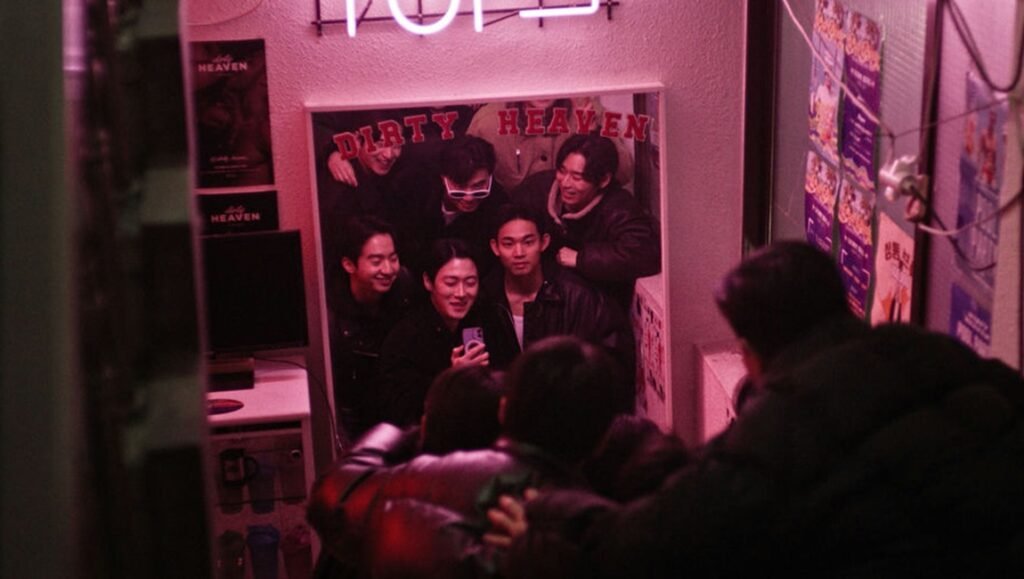
We soon learn that Cheol-jun is a student, closeted from his fellow defector peers as he prepares for college and works an unfulfilling job at a grocery store. The film chugs along slowly until Cheol-jun attends a gay mixer and begins a friendship with Yeong-jun (Kim Hyun-mok), a member of an intimate group of friends that regularly meet for drinks — a group Cheol-jun subsequently joins. 3670’s own namesake — an interesting title in its own right — derives from this group, the four numbers functioning as a group chat code for potential meet-ups.
From this very moment of narrative propulsion, Park commits to the same mimetic brand of cinema that haunts the multiplexes of today. Anything that can be seen in the commercial pantheon of the coming-of-age film — most notably, something like Lady Bird — can be seen here: the friendship deepens, the protagonist comes out of their shell, a betrayal occurs, a forgiveness is given. Forget the coming-of-age story altogether and look instead to a different, far more insipid genre; one that seems more committed to the clunky, wooden act of crossing each t and dotting each i than allowing a character or a line to breathe despite the shackles of filmic structure. Forget the muted evocation of a Rohmer or Ozu character and look no further than song and dance being used as an allegory for an emotional arc (the film ends with Cheol-jun conquering his fear of live karaoke). All of that to say, it’s a wonder that the modern festival film — arriving in a place where original, independent stories are championed — could be so artistically redundant.
Most of the merits that present themselves in 3670 can be attributed to Cho Yoo-hyun, whose central performance bears resemblance to the sort of film this should be. It’s the kind of enigmatic performance that aptly toes the line between young and old polarities, and often allows one to empathize with Cheol-jun, even when the film fails to provide the means to do so. Yoo-hyun in 3670, in that sense, is not unlike Marie Rivière in Rohmer’s The Green Ray, a fully-fledged adult who often cowers in adolescent fear at social discomfort. Rohmer, however, as mentioned, understood in The Green Ray what Joon-ho could not in 3670, which is the wondrousness of the austere, unflinching resolution in place of the polemical, heavy-handed one.
Call the comparison what you will, but it is nonetheless noteworthy to draw distinctions between the film that is and the film that could be; or, more suitably, the films that are and the films that could be. 3670 poses the questions: What have we left to gain from the coming-of-age story? What, if anything, is lost in transposing its framework to a different set of circumstances each time and with varying results? Why, for a film so singular — both in its premise and milieu — do such broad questions arise? Perhaps it is because the contemporary genre film has become more rigid than ever before. Perhaps we want something different, something fresh. We want to rid ourselves of expectancy, of seeing each step before it appears. We want a film to be unwavering, innovative, dialectical, evocative, intellectually stimulating. Ultimately, the largest misstep of 3670 is its inability to become something wholly its own, to be free from the confines of its supposed category. Where it should be contemplative, it is overly literal. Where it should astound, it is banal. 3670’s new identity, then, is that of an overcorrecting driver: the more it yanks in the direction of tradition, the harder it veers off course. — JOSEPH DIMACCHIA
Fujiko
Fujiko (Yuki Katayama) sells insurance to a cook by making her life part of the policy. She looks at her prospective client, adopts a hangdog manner, and begins listing everything that has gone wrong. Director Taichi Kimura then cuts to 1977 as soon as the story gets underway, and Fujiko’s past reaches us as a sales pitch, with all the calculation that entails. She has learned that suffering can close a deal. The joke complicates the film’s evident admiration for her: survival has given Fujiko a story, and she has become very good at finding uses for it.
In Fujiko, the titular character’s account begins with her daughter Mari’s birth during a storm and hospital blackout. Soon afterward, Fujiko’s in-laws take the baby, but the film does not turn this into a custody dispute, as the kidnapping ends any possibility of compromise. With help from her own mother, Fujiko retrieves Mari and leaves. Taking the child back is the first time she claims motherhood for herself; raising Mari alone follows from that break. She does not set out to make an ideological statement, though her refusal to let either family determine how she lives gives the decision an obvious political charge.
Fujiko says she approaches 500 nurseries, nearly all of which reject Mari for being too young. A friend working at one finally gets her a place. Childcare enables Fujiko to work, and work takes almost every hour the nursery has freed for her, with her days narrowing in scope to the act of earning money and then returning to collect Mari. Kimura repeatedly returns to this routine, allowing self-sufficiency to register as tiring well before it becomes triumphant. And while the story begins in 1977, eight years before Japan passed its Equal Employment Opportunity Law, Kimura does not lean on retrospective explanation. Fujiko simply encounters inequality as a timetable she cannot make work.
Light narrates these reversals alongside the screenplay, and Kimura’s camera organizes Fujiko’s world around access to it. When her circumstances deteriorate, interiors sink into shadow and cigarette smoke; better periods are filmed under bare lamps or in direct sun, often outdoors. The alternation is hardly subtle, yet its bluntness belongs to the film’s storybook rhythm — the pattern gives each change in fortune an immediately recognizable look. It can also announce a downturn or recovery before Fujiko understands the material reality of what has changed.
Katayama gives the lighting scheme a less predictable center, adjusting Fujiko’s manner to whoever is listening. The dejected delivery offered to a client is both remembered pain and practiced sales technique; with her family, the same reserve becomes defiance. Katayama does not chart confidence as a steady rise, but instead lets Fujiko harden, showing how endurance can become a temperament. Working for Mari remains an answer to the mother and brother who humiliated her, and even in the film’s brisker work scenes, Katayama retains something of that grievance in her bearing.
Editor Aika Miyake moves through the five years by returning to Fujiko’s insurance clients. A glance across a table and the beginning of another unhappy story open a passage into the past. At first, the cut gives Fujiko control: she chooses where her history starts and how much a customer hears. But soon the structure becomes visible, as Fujiko suffers, recovers, finds work, and turns what happened into another sales anecdote. The speed of this suits Kimura’s music video background, but the repetition can also make the transitions feel mechanical. Each return to the past promises development and delivers another restart.
Fujiko’s professional ascent is built from relationships she is strikingly willing to convert into opportunities. She starts taking her meals at the restaurant run by a friend of her late father. The visits grow into something resembling family, and the old man becomes “Grandpa.” There, she meets the insurance salesman who brings her into the business, and when Fujiko discovers that her history moves clients, soon she is outselling everyone. She also recognizes her colleague’s growing attachment, but does little to interrupt it before he proposes. She considers accepting, provided he move with her, but then a promotion offers Fujiko a new posting, and she is ready to go. The people who fed her when she had nowhere else, along with the man who imagined a future with her, then seem to immediately belong to a chapter she considers finished. Fujiko treats the departure as another brave restart. Fujiko scarcely pauses. Mari voices the cost in plain terms: she wants a father. She never gets one.
The film’s sound design, meanwhile, works against the neatness of its narrative pattern. Its live-recorded rock music has a coarse, provisional quality, as though the musicians were finding the cue while the scene was already running; as a result, guitar and drums push to the front of the mix instead of politely supporting the dialogue. That looseness is of a thematic piece with Fujiko’s tendency to act first and decide what her actions meant afterward, and the record left by Fujiko’s father turns that rough sound into a full stylistic rupture. She wakes to find the disc on the turntable, marked with a dedication. The guitar solo begins, brightness breaks into the image, and rapid animation takes over, the moment seeming closer to a drug trip than appreciation of a family keepsake. The eruption is enjoyable and blunt, yet the authorization still comes from a man. After escaping relatives who presume to decide for her, Fujiko receives her clearest affirmation from her dead father.
Humor keeps the film from demanding sympathy every time Fujiko suffers another setback. The sales framework guarantees that Fujiko survives whatever we are watching, and jokes repeatedly disperse the tension Katayama has begun to build. But by the final stretch, repetition has dulled even her force. So, in 1982, Fujiko has become the mother she was not prepared to be when Mari was born, and Kimura makes that growth credible by grounding it in the daily labor of earning money and finding care for a child. But Fujiko’s capacity to live with other people once she no longer needs their immediate help develops less convincingly — her career advances; her emotional habits keep returning to their starting point. Mari’s wish for a father thus remains unanswered, one part of Fujiko’s history that cannot be polished into a successful sale. — GUILHERME QUIREZA
Comments are closed.